
Gabriela Giotto: Turning Art into an International Fashion Identity
Written by Admin • 2026-11-10 00:07:00
Topics
Explore the journey of Slovak designer Gabriela Giotto, who transforms her original artwork into distinctive textile designs, creating a unique fashion identity that resonates internationally. Giotto's story illustrates the fusion of art and entrepreneurship, showcasing how creativity can thrive in the global fashion industry.
Gabriela Giotto: From Original Artwork to Global Fashion
Turning Art into an International Fashion Identity
Fashion can be more than a statement of personal style. For Slovak designer Gabriela Giotto, it is a way to bring art beyond the canvas and into everyday life. Through her eponymous fashion brand, she transforms original artwork into expressive textile designs, combining vivid colours, intricate patterns and distinctive compositions to create garments that reflect her artistic vision.
Her approach connects two creative worlds that are often presented separately. Painting provides the original inspiration, while fashion gives those ideas movement, form and a place in people's daily lives. Rather than relying exclusively on ready-made prints, Giotto develops her own designs and translates them onto fabric, making the visual identity of each creation central to the finished piece.
Over the years, her work has reached audiences through fashion presentations and international platforms, including events associated with Slovakia's participation at Expo 2017 in Kazakhstan. Her journey offers a perspective on creative entrepreneurship: how an individual artistic language can become the foundation of a fashion brand while continuing to evolve across products, collections and cultural settings.
From Painting to Wearable Art
For Gabriela Giotto, the relationship between art and fashion begins with a simple but powerful idea: artistic expression does not have to remain on a gallery wall. A painting can invite people to pause and observe, but when its visual language is translated into clothing, it enters a more personal and everyday setting. It moves with the wearer, becomes part of an individual style and can be experienced in ways that a traditional canvas cannot offer.
This idea has helped shape the identity of Gabriela Giotto Fashion. Her work draws on original artwork, expressive colour combinations and decorative compositions, creating garments that function as both fashion pieces and visual statements. The designs are not simply intended to follow a seasonal trend. They offer a way to bring the artist's imagination into the choices people make about how they present themselves.
The transition from painting to wearable design also requires a different way of thinking. An image that works on a flat surface must be reconsidered when applied to fabric, shaped into a garment and viewed in motion. Scale, colour, placement and silhouette all influence the final result. The original artistic idea must remain recognisable while adapting to the practical and aesthetic demands of fashion.
That relationship between artistic intention and wearable form is central to Giotto's creative identity. By allowing her artwork to move into new formats, she expands the possibilities of her practice without abandoning its original source. Fashion becomes not a departure from art, but another medium through which her ideas can be shared.
Creating a Signature Through Original Textiles
A recognisable fashion identity often begins with details that audiences can identify before they even know the designer's name. In Giotto's work, original textile patterns play a central role in establishing that visual recognition. She develops her own artwork and translates it onto fabric using specialised printing techniques, allowing the motifs and compositions to remain closely connected to her creative vision.
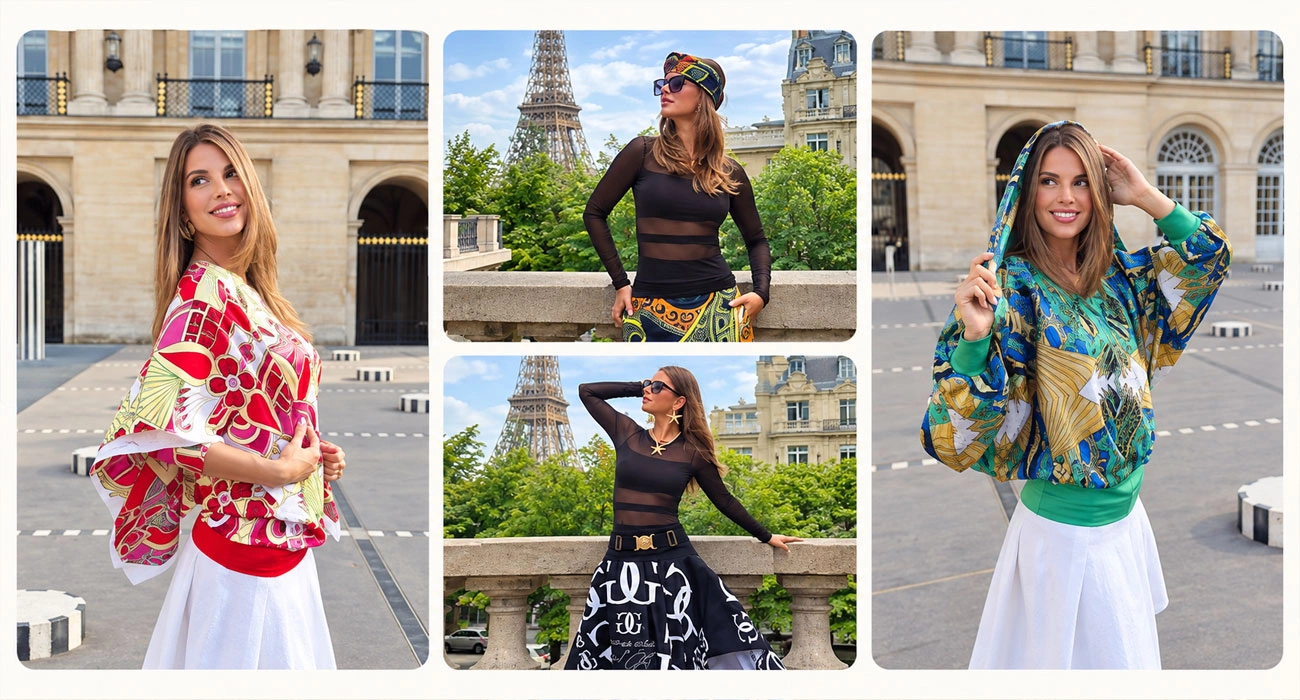
Colour is one of the most immediately noticeable elements. Bold blues, greens, golds and contrasting decorative details create a sense of movement, while intricate patterns give individual pieces their own visual character. Depending on the garment, these designs can feel expressive and dramatic or more fluid and elegant. Their common thread is the relationship between the artwork and the surface on which it appears.
Creating a textile design involves more than reproducing an image. The pattern must work with the shape of the garment, its proportions and the way the fabric falls on the body. A motif that looks striking in isolation may need to be adapted to suit a dress, scarf or accessory. The design must maintain its visual impact while becoming part of a functional object.
Giotto's wider product range has included clothing, scarves, bags, cushions and other design objects. This variety allows her visual language to move beyond a single category, giving audiences different ways to engage with her work. It also creates opportunities to reinterpret recurring artistic elements across different forms without making every product identical.
For a designer-led brand, this consistency matters. A signature style helps distinguish a collection in a crowded marketplace, while continued experimentation keeps the creative process open. Giotto's use of original artwork offers a foundation for that balance: a recognisable identity that can develop through different colours, compositions, materials and product formats.
The Business Behind the Creativity
Behind every independent fashion label is a second creative challenge: turning an artistic vision into a business that people can recognise, understand and engage with. A distinctive design may attract attention, but sustaining a brand also requires communication, planning, professional relationships and the ability to explain what makes the work different.
Gabriela Giotto's professional background includes experience in media, marketing, public relations and corporate work. This part of her journey adds context to her development as a designer. It shows how creative careers can draw on skills acquired in different professional environments, rather than following a single, uninterrupted path. Her experience in communication and business provides a useful lens through which to understand the demands of developing an independent fashion identity.
For a designer, the product is only one part of the relationship with an audience. The story behind a collection, the way it is photographed, the settings in which it is presented and the consistency of its visual identity all influence how people encounter a brand. Fashion presentations and catalogues can introduce the work to new audiences, while clear communication helps explain the thinking behind the designs.
Giotto's original textile patterns provide a strong foundation for this storytelling. They offer a tangible connection between her artistic practice and the products carrying her name. Instead of relying solely on a logo or a marketing message, the brand can communicate through the work itself: its colours, motifs, compositions and the way these elements appear across different pieces.
Creative entrepreneurship nevertheless involves balancing artistic freedom with practical decisions. A designer must continue developing ideas while considering production, presentation and the realities of reaching an audience. There is no single formula for maintaining that balance. Giotto's journey illustrates how an individual visual language, combined with professional experience and ongoing commitment, can form the basis of a distinctive creative business.
Taking Slovak Design Beyond Borders
For an independent designer, presenting work beyond the home market creates an opportunity to place a personal creative vision in a wider conversation. International fashion events bring together different aesthetics, professional networks and audiences, allowing designers to introduce their work to people who may not otherwise encounter it. For Gabriela Giotto, these presentations have formed part of the development of her brand.
One milestone came in 2017, when her work was presented in connection with Slovakia's participation at Expo in Kazakhstan. Her career has also included presentations associated with Czech Fashion Week and other fashion events. These experiences provide a broader context for understanding how her designs have travelled beyond Slovakia and reached different audiences.
International visibility, however, is more than appearing in a new location. It creates an opportunity to communicate the identity behind the work. A designer's patterns, colours and approach to form become part of a visual conversation with audiences who bring different cultural references and expectations. The challenge is to remain recognisable while allowing the work to be understood in new contexts.
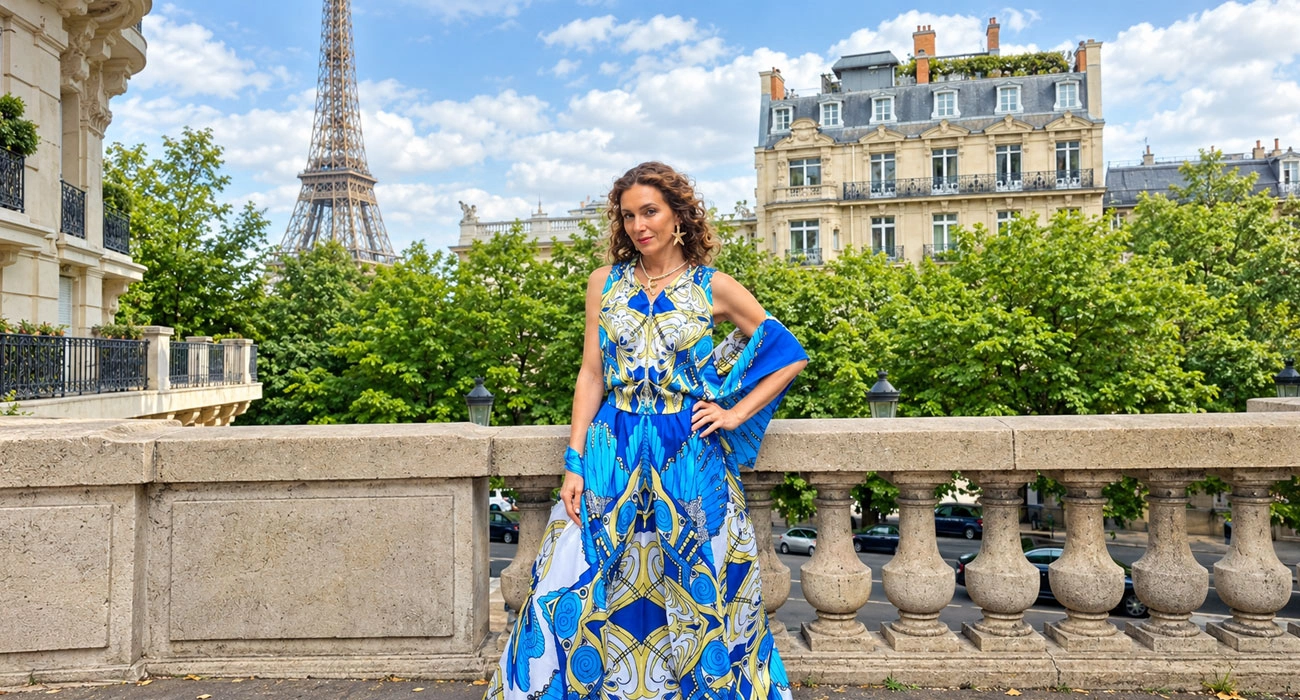
The Paris photographs accompanying this feature illustrate that contrast. The city's architecture provides a familiar cultural backdrop, while Giotto's vivid textiles create a distinctive visual presence. The setting reinforces the relationship between fashion and place, showing how a designer's work can be presented within a broader cultural environment without losing its own character. The images should be understood as a visual presentation of her designs rather than evidence of a specific runway event unless the event details are independently confirmed.
In 2025, Slovak media reported on the fifteenth anniversary of Gabriela Giotto Fashion and a presentation at New York Fashion Week. The milestone provides a useful moment to reflect on the brand's development and its continued pursuit of international exposure.
For Slovak designers, international platforms can offer opportunities to introduce their work to new audiences and build professional connections. Yet the lasting value of such experiences depends on what underpins them: a clear creative identity, a coherent body of work and the willingness to continue developing ideas. In Giotto's case, her original textile designs provide that connecting thread, linking the artistic process to the collections presented beyond her home country.
Art finds a different life when it moves beyond the canvas and becomes part of what people wear.— Editorial reflection
- Gabriela Giotto is a Slovak designer who founded the Gabriela Giotto Fashion brand and is known for translating her own artwork into distinctive textile designs.
- In 2017, she presented her work in connection with Slovakia’s participation at Expo in Kazakhstan, an international exhibition that brought her designs to a broader audience.
- Slovak media reported on the brand’s 15th anniversary and Giotto’s presentation at New York Fashion Week 2025, marking a significant milestone in the development of her fashion label.
Gabriela Giotto's journey shows how an individual artistic vision can develop into a recognisable creative identity. By translating original artwork into textiles and extending that visual language across clothing and accessories, she has built a fashion practice that connects artistic expression with everyday life. Her international presentations offer opportunities to bring that perspective to new audiences, while the work itself remains rooted in her distinctive approach to colour, pattern and design.
Her story also reflects the broader demands of creative entrepreneurship: developing an original point of view, communicating its value and continuing to evolve without losing the qualities that make it distinctive. Through BritishPEDIA Showcase, Giotto's journey becomes part of a wider conversation about creativity, professional reinvention and the possibilities that emerge when artistic ideas find new forms. Her work reminds us that art does not always have to remain on a canvas; sometimes, it can move with us into the world.
Categories
Tagged in this story
Image sources