
Leonora Carrington: The Surrealist Who Built a World of Her Own
Written by Admin • 2026-09-08 01:06:00
Topics
Leonora Carrington transformed Surrealism into something deeply personal, creating an imaginative universe of myth, transformation, and mystery that continues to influence how modern audiences understand the movement.

Leonora Carrington: The Surrealist Who Created a World of Her Own
Exploring the extraordinary legacy of an artist who redefined Surrealism.
The Woman Who Refused to Stay Inside One Movement
Leonora Carrington’s work transcends the boundaries of Surrealism, illustrating her refusal to be confined by any singular artistic movement. Although she is often associated with the Surrealists, her art reflects a unique blend of personal mythology, symbolism, and transformation. Carrington's creative vision was not merely a reaction to the Surrealist movement; it was a world-building endeavor that integrated her experiences, beliefs, and dreams. This independence in her artistic expression allows her work to resonate with various audiences, making her legacy all the more compelling in the contemporary art scene.
Her artworks often feature whimsical creatures and dreamlike landscapes, showcasing her ability to craft narratives that defy conventional interpretation. By doing so, Carrington invites viewers to explore the depths of their own imagination while navigating her intricate worlds. This distinct approach to art underscores her position as a pioneering female artist who challenged the norms of her time and continues to inspire future generations.
Exile, Transformation and Reinvention
Carrington’s life was marked by significant geographical and historical upheavals that profoundly influenced her artistic trajectory. Born in England in 1917, she moved to Paris in the 1930s, immersing herself in the vibrant Surrealist community. However, the onset of World War II forced her to flee to Mexico, where she would spend much of her later life. This transition was not merely a change of scenery; it represented a profound transformation in her artistic identity. In Mexico, Carrington embraced the rich cultural tapestry that surrounded her, incorporating elements of Mexican folklore and spirituality into her work.
This period of exile allowed Carrington to reinvent herself as an artist, marrying her European influences with her new Mexican environment. Her works began to reflect a unique synthesis of her past and present, exploring themes of identity, transformation, and the subconscious. By embracing her diverse influences, Carrington established a creative language that was distinctly her own, further solidifying her status as a pivotal figure in the art world.
Myth as a Creative Language
Mythology plays a central role in Carrington’s artistic narrative, serving as both a source of inspiration and a means of exploring deeper truths about the human experience. Her work is populated with recurring symbols and fantastical creatures that embody her fascination with transformation and the mystical. Through these mythological elements, Carrington constructs a visual language that speaks to the subconscious, allowing her to address complex themes such as identity, history, and the nature of reality.
Carrington's ability to weave myth into her art not only enhances the richness of her work but also positions her as a storyteller. Each piece invites viewers to embark on a journey through her imaginative landscapes, encouraging them to interpret the narratives that unfold. This intersection of myth and art showcases Carrington's profound understanding of the human condition, making her contributions to Surrealism both timeless and relevant.
Beyond Painting
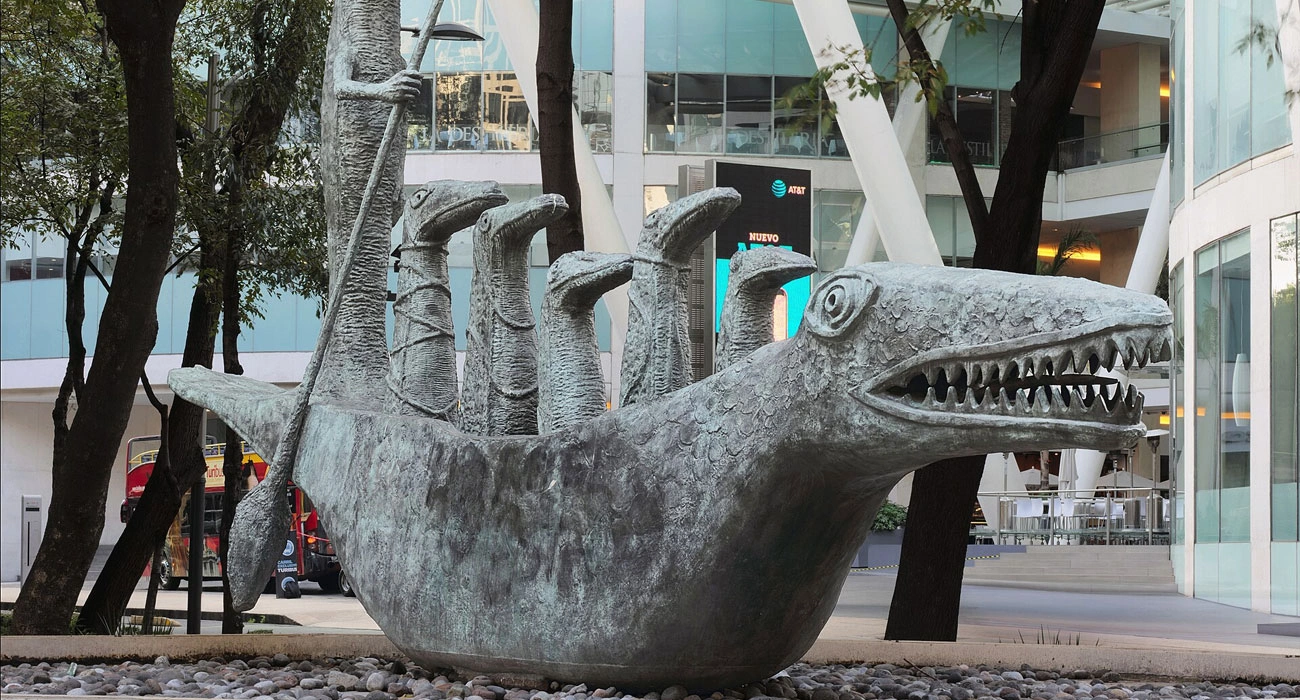
Carrington’s artistic practice extended far beyond painting, encompassing drawing, sculpture, tapestry, and writing. This versatility reflects her boundless creativity and desire to explore different mediums as a means of expression. Her sculptures often capture the same whimsical essence found in her paintings, while her tapestry work showcases a unique narrative quality that invites contemplation. Each medium allows Carrington to convey her ideas differently, revealing new dimensions of her imaginative universe.
In addition to her visual art, Carrington was also a prolific writer, using literature as another avenue to explore her themes of identity and transformation. Her stories often mirror the surreal qualities of her visual work, further illustrating her commitment to a comprehensive artistic practice. By embracing multiple forms of expression, Carrington not only enriched her own body of work but also expanded the possibilities for women artists within and beyond Surrealism.
One of the most singular artists in the history of art.— Almine Rech exhibition description
Facts & Insights
- Leonora Carrington was born in 1917 and died in 2011, leaving behind a career spanning much of the 20th century.
- Her artistic practice extended beyond painting into drawing, sculpture, tapestry and writing.
- A new Paris exhibition runs from September 8 to October 10, 2026 and brings together works from across those mediums.
1917–2011
Life & Legacy
5+
Artistic Mediums
Sep 8
2026: Exhibition Opening
1
Singular Visual Universe
A World That Could Only Belong to Her
Leonora Carrington's enduring power comes from the unmistakable individuality of her imagination. While history often places artists inside movements and categories, Carrington repeatedly demonstrated why such labels can only explain part of an artist's contribution. Her paintings, sculptures, and writings created a visual language that belonged entirely to her — one capable of moving between mythology, dreams, history, and transformation without losing its identity. More than a century after her birth, that independence remains one of her greatest achievements.
BritishPEDIA's cultural legacy stories exist for precisely these figures: artists whose work becomes more meaningful with time because they did not simply participate in an artistic era but created worlds future generations could continue discovering.
Categories
Tagged in this story
Image sources
By Lee Miller - Original publication: unknown | Immediate source: http://www.wikiart.org/en/leonora-carrington, Fair use, https://en.wikipedia.org/w/index.php?curid=45003912 | AI coloured