Neri Oxman's interdisciplinary practice unites architecture, biology, computation, and design, envisioning a future where technology collaborates with nature. Her work challenges conventional boundaries and inspires a deeper understanding of innovation and sustainability.
Neri Oxman: Where Design Meets Biology, Technology and the Future
What if the future of design does not begin with machines, but with nature?
Beyond Architecture
Neri Oxman stands at the intersection of architecture, biology, computation, and design, challenging traditional conventions that partition these fields. Her interdisciplinary background enriches her practice, allowing her to explore design as a holistic endeavor rather than a segmented process. Oxman's work transcends conventional design categories, revealing how knowledge from various domains can synergize to create innovative solutions. By treating design as a system interwoven with natural principles, she invites us to reconsider the relationships between technology, biology, and the environment.
Oxman’s approach emphasizes the importance of material ecology, where the materials themselves are seen as active participants in the design process. This perspective encourages designers to think beyond standard manufacturing practices and instead embrace the adaptability and responsiveness of materials inspired by nature. By integrating computational design with biological concepts, Oxman’s work illustrates a future where architecture can evolve along with its surrounding ecosystems.
When Materials Become Part of the Design
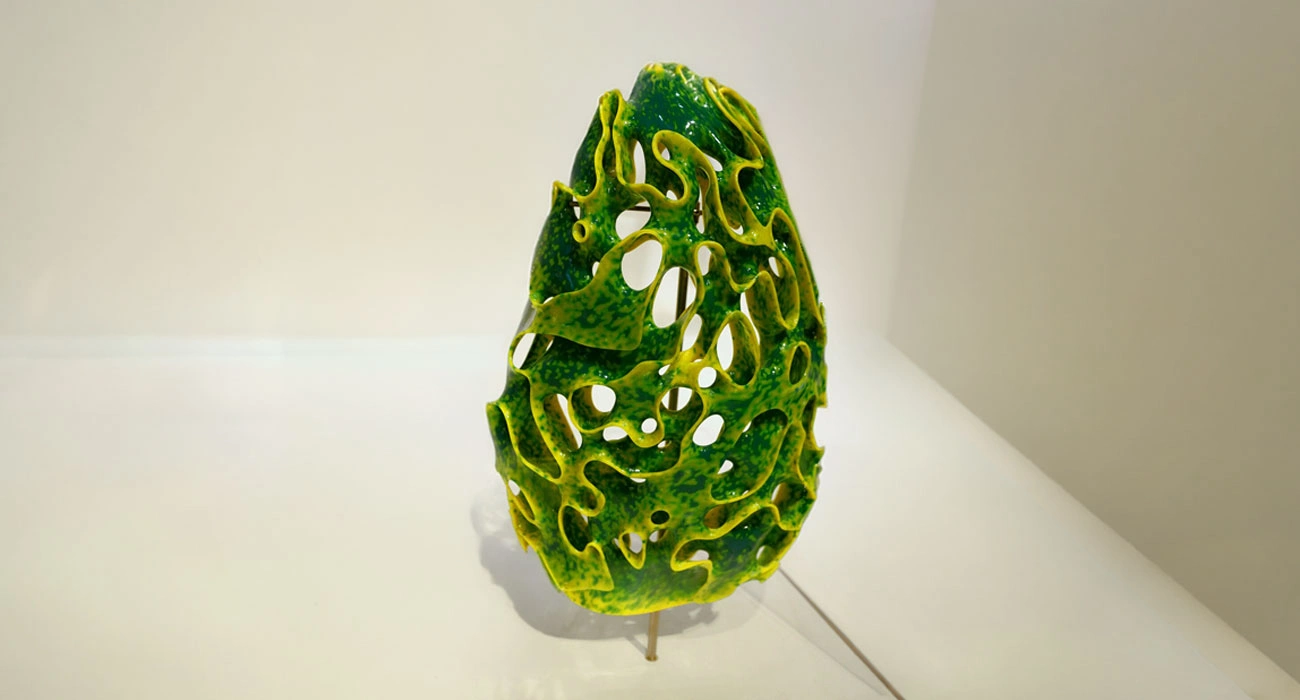
Oxman’s experiments with computational fabrication and 3D printing showcase how materials can become integral to the design narrative. Her renowned Medusa 1 series exemplifies this ethos, combining advanced technology with biological principles to create structures that are not only visually striking but also functionally responsive. By harnessing techniques such as multi-material 3D printing, Oxman explores the potential for materials to self-assemble and adapt, forming a bridge between technology and nature.
As Oxman continues to push the boundaries of design, her work emphasizes the potential for a symbiotic relationship between biology and technology. She poses thought-provoking questions about the role of materials in shaping our environments and how they can be designed to support rather than exploit natural systems. This innovative perspective offers a new lens through which to view the future of architecture and design.
The Posthuman Design Question
Oxman’s ongoing exhibitions, such as the 'Posthuman' exhibition during Paris Design Week, highlight her exploration of the boundaries between body, technology, and nature. These platforms allow her to showcase how her designs challenge our understanding of the human experience in relation to the technological landscape. By integrating the principles of biological design into her work, Oxman invites viewers to reassess their perceptions of what it means to exist in a world increasingly influenced by technology.
The discourse surrounding her work addresses pressing contemporary issues, including how we define the human body and its relationship with the rapidly advancing technological environment. Through her innovative designs, Oxman contributes to a broader conversation about the implications of technology on our lives, making her work essential to understanding the complexities of modern existence.
From MIT to the Global Art World
Oxman’s journey from the Massachusetts Institute of Technology (MIT) to the global art scene exemplifies the interconnectedness of science, design, and contemporary art. Her work not only pushes the boundaries of architectural practice but also redefines the role of artists and designers in addressing global challenges. By presenting her creations in esteemed exhibitions worldwide, she encourages dialogue about the future of design and its potential to impact society positively.
Through her collaborations with art institutions and her participation in international design events, Oxman has carved a niche for herself at the forefront of innovative design. Her work serves as a testament to the power of cross-disciplinary collaboration, demonstrating that the future of design lies in the ability to merge various realms of knowledge and expertise.
— Pneuma 2 [By John Cummings - Own work, CC BY-SA 3.0, https://commons.wikimedia.org/w/index.php?curid=29018175] | Expanded using Adobe Generative Fill
Designing for a Different Future
Neri Oxman envisions a future where design is not just about aesthetic appeal or functionality but is rooted in ecological awareness and sustainability. Her work inspires new paradigms that prioritize the resilience of natural ecosystems and the well-being of humanity. By advocating for designs that are adaptive and informed by biological principles, Oxman is pioneering a movement toward a future where technology and nature coexist in harmony.
As her exhibitions continue to reach diverse audiences around the globe, Oxman’s philosophy challenges designers to rethink their approach to innovation. It is not merely about efficiency; it is about fostering a deeper connection with the materials and environments surrounding us. In this way, her work transcends traditional design boundaries and contributes to a more thoughtful and responsible approach to the arts and sciences.
“”
Design inspired by nature can become a bridge between technology and biology.
— Neri Oxman
Facts & Insights
Neri Oxman's Medusa 1 Head Series was created in 2012 using multi-material 3D printing.
Her work is being presented in the Posthuman exhibition during Paris Design Week in September 2026. at West Bund Art Museum in Shanghai from September 24, 2026.
Medusa 1 is scheduled to appear in the Computer Worlds exhibition